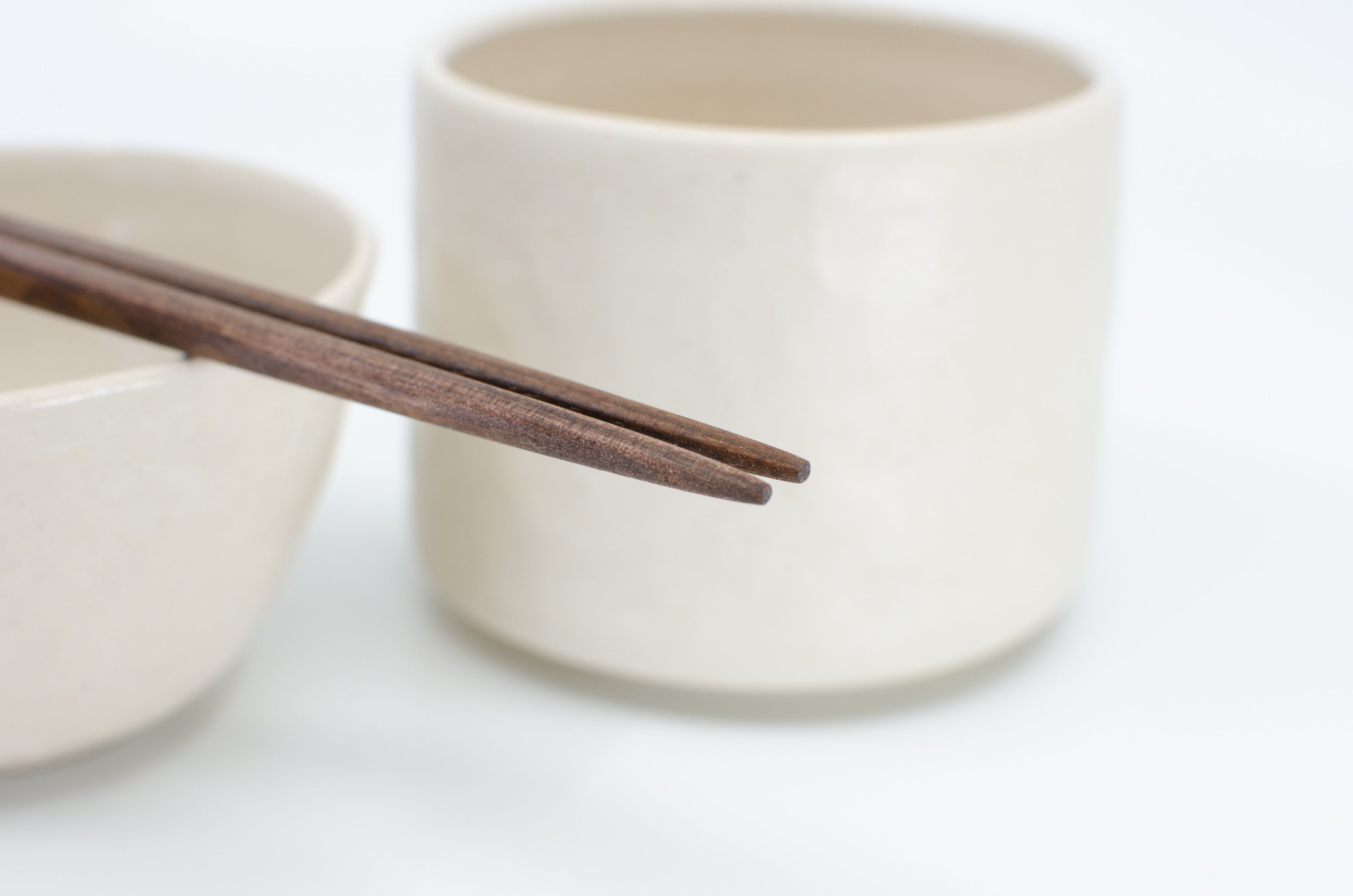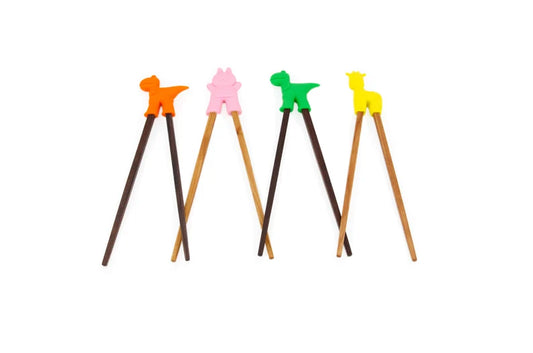
A pair of wooden chopsticks looks simple.
But one of the less obvious decisions in making them is what you put on the wood—or, perhaps more importantly, what you choose not to put on it.
At Simpo, we finish our wooden chopsticks with tung oil. It takes longer than many modern finishing methods, but we like what it does: it protects the wood while allowing wooden chopsticks to still look and feel like wood.
Here’s why.
What Is Tung Oil?
Tung oil is a natural drying oil traditionally made from the seeds of the tung tree.
Unlike mineral oil, which largely remains an oil and gradually washes or wears away, tung oil is a drying oil. When exposed to oxygen, it undergoes a process called oxidative polymerization.
In simpler terms: it cures.
The liquid oil gradually changes into a solid, cross-linked material within and near the surface of the wood.
That distinction matters for something like chopsticks, which are repeatedly handled, washed and exposed to moisture.
Why Not Just Leave the Wood Unfinished?
You can.
Bare hardwood can make perfectly functional chopsticks. But wood naturally interacts with moisture. Repeated wetting and drying can affect its surface and, over time, contribute to changes in texture and dimension.
A finish helps reduce how readily moisture reaches the wood.
The challenge is finding a finish that provides useful protection without turning a beautiful piece of hardwood into something that feels coated in plastic.
That is where tung oil becomes interesting.
Tung Oil Doesn’t Hide the Wood
One of our favourite things about hardwood is that no two pieces are exactly alike.
Walnut can move from warm brown to deep chocolate, sometimes within the same piece. Cherry develops its own warm character and changes with age and exposure to light.
We don’t want to cover that up.
Tung oil penetrates into the wood and brings out the grain rather than obscuring it beneath a thick surface coating. Once properly cured, it leaves a natural-looking finish with relatively little of the artificial gloss associated with heavier film finishes.
Pick up the chopsticks and you can still feel that they’re made from wood.
For us, that’s important.
Water-Resistant, Not Waterproof
There’s an important distinction here.
Tung oil is often described online as “waterproof.” We wouldn’t describe wooden chopsticks that way.
A better word is water-resistant.
Research into natural-oil wood finishes has found that tung oil can create a hydrophobic, robust wood surface as it polymerizes. That helps slow water from wetting the wood, but it doesn’t turn wood into an impermeable material.
And that’s perfectly fine.
We’re not trying to make wooden chopsticks behave like plastic. We’re trying to give the wood sensible protection for the way chopsticks are actually used.
Why Curing Matters
Applying tung oil isn’t simply a matter of wiping oil onto wood and immediately putting the chopsticks into service.
The finish needs time and oxygen to cure.
This is one reason making products with drying oils can be surprisingly slow. Polymerization continues after the surface first feels dry, and sufficient curing time matters to the performance of the finished surface.
For mass production, waiting isn’t particularly attractive.
For us, that’s an acceptable trade-off.
Sometimes the slower process produces the result we actually want.
Tung Oil and Food Contact
Because chopsticks touch food every time they’re used, the finish deserves more consideration than it might on a decorative piece of furniture.
Tung oil is listed by the U.S. Food and Drug Administration among substances addressed under regulations concerning food-contact coatings, subject to the conditions specified in those regulations.
There’s also an important consumer distinction worth knowing: a product labelled “tung oil finish” isn’t necessarily the same thing as pure tung oil. Commercial wood finishes can contain other oils, resins, solvents or additives.
So when comparing wooden kitchenware, it’s worth asking what the actual finish is—not simply whether the word “tung” appears on the label.
Why Not Mineral Oil?
Mineral oil is popular for cutting boards and wooden kitchenware for good reason. It’s inexpensive, easy to apply and easy to refresh.
But it doesn’t cure in the same way tung oil does.
That means mineral-oil-treated wood generally needs periodic re-oiling as the oil is gradually removed through use and washing.
Tung oil asks for more patience at the beginning. In return, once it has properly polymerized, the finish becomes part of the wood’s protective surface rather than remaining simply as liquid oil within it.
For something as frequently handled as a pair of chopsticks, we prefer that approach.
Why Not Coat Them in Something Harder?
We could.
Modern coatings can provide excellent resistance to water and wear. There are plenty of situations where they’re the right engineering solution.
But maximum protection isn’t our only objective.
There’s something appealing about holding a wooden utensil and actually being able to experience the material from which it was made—the grain, the warmth and the subtle variation from one pair to another.
If we wanted chopsticks that felt completely sealed away from their material, there are easier materials to manufacture them from in the first place.
We make wooden chopsticks because we like wood.
The finish should respect that.
A Small Decision You Probably Never Thought About
Most people don’t spend much time thinking about chopstick finishes.
We do.
A pair of chopsticks is an incredibly simple object, and that’s precisely why the little decisions become noticeable: the species of wood, the taper, the shape of the tip, the sanding and, finally, the finish.
Tung oil isn’t the fastest way to finish a piece of wood.
It isn’t magic, and it doesn’t make wood indestructible.
It simply gives us a combination we like: natural feel, visible grain, moisture resistance and a finish that cures rather than simply remaining oily.
For an object that you hold in your hand every day, that feels like the right compromise.
And sometimes, the simplest objects deserve the most thought.