
At first glance, chopsticks can seem too simple to compare. They are two sticks used to pick up food—how different could they really be?
The difference often becomes noticeable only after using them regularly. Length, thickness, shape, straightness, surface finish and weight can all affect how naturally a pair moves in your hand. Materials and finishes also determine how the chopsticks should be cleaned and how they change over time.
IKEA, MUJI and Simpo all offer reusable chopsticks, but they are designed around very different priorities. IKEA focuses on extremely accessible household value. MUJI offers a broad selection of Japanese-style shapes, materials and finishes. Simpo focuses on carefully made North American hardwood chopsticks designed for long-term everyday use.
This comparison is not about declaring one brand universally better. It is about understanding what you receive at each price point and choosing the pair that fits the way you eat, clean and care for your tableware.
Quick Comparison
| Feature | IKEA TREBENT | MUJI Chopsticks | Simpo Goods |
|---|---|---|---|
| Typical material | Bamboo | Varies by product, including bamboo, maple, sakura wood and yellow cedar | North American cherry or walnut hardwood |
| Finish | Oil-treated | Varies by model, including coated and dishwasher-safe options | 100% pure tung oil and beeswax |
| Production | Large-scale retail production | Large-scale retail production | Made in Edmonton, Canada |
| Care | Hand wash | Depends on the specific model | Hand wash and avoid soaking |
| Main advantage | Very low price and practical multipack | Variety, convenience and Japanese-style options | Hardwood feel, consistency, material transparency and renewability |
| Best for | Affordable household use | Buyers who want a particular shape or easier-care option | Buyers who value material, feel and long-term ownership |
Product specifications may change, so check each brand’s current product page before purchasing.
The Short Answer
Choose IKEA if price is your main priority and you need several reusable pairs for a household or gathering.
Choose MUJI if you prefer Japanese-style chopsticks, want to select from several shapes and materials, or need a dishwasher-safe model.
Choose Simpo if you care most about real hardwood, a natural oil-and-wax finish, consistency between the two sticks and a pair designed to feel almost unnoticed in your hand.
IKEA TREBENT: Simple and Extremely Affordable
IKEA’s TREBENT chopsticks are made from bamboo and treated with oil. In Canada, they are sold as an inexpensive set of four pairs.
Their greatest advantage is easy to understand: value. A household can purchase several reusable pairs for less than the price of a single pair from many specialty brands. They are useful for casual meals, dinner parties or keeping extra chopsticks available for guests.
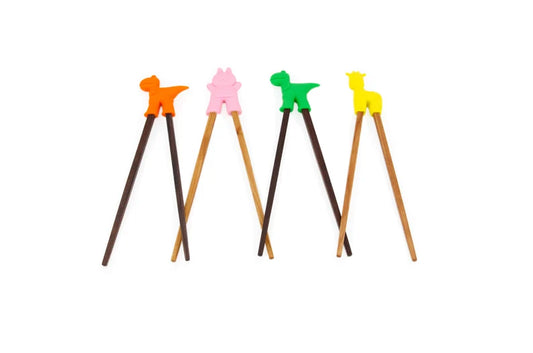
The decorative patterns also make the pairs easier to identify and give them more visual character than completely plain bamboo chopsticks.
According to IKEA’s current care instructions, TREBENT chopsticks should be washed by hand and treated with a food-approved oil when necessary. They are reusable, but their low price and multipack format place them in a different category from individually made hardwood chopsticks.
IKEA may be right for you if:
- You need several pairs at the lowest possible cost.
- You want simple reusable chopsticks for guests or casual meals.
- You like the light feel of bamboo.
- Individual differences in grain, shape and finishing are not major concerns.
The limitation is not that they are “bad” chopsticks. They are simply designed to meet a mass-market price point. If you are looking for a carefully matched hardwood pair or want detailed information about its finishing process, IKEA is probably not the closest fit.
MUJI: More Choice and Everyday Convenience
MUJI occupies the middle ground in this comparison, although there is no single product that represents every MUJI chopstick.
Its Canadian selection has included bamboo, maple, sakura wood, yellow cedar and other wooden options. It also offers round, octagonal and hexagonal forms. Some models use coatings designed to withstand dishwasher cleaning, while others have different care requirements.
That variety is MUJI’s main advantage. Buyers can select a shape, wood appearance and maintenance level that fits their preferences without entering the price range of small-scale craft production.
MUJI’s understated visual language also appeals to people who want quiet, Japanese-inspired tableware. Its chopsticks tend to be restrained rather than heavily decorated.
However, shoppers should read the specifications of the exact model rather than assuming all MUJI chopsticks are made from the same wood, use the same coating or are dishwasher-safe.
MUJI may be right for you if:
- You prefer Japanese-style lengths and shapes.
- You want to choose between round, octagonal or hexagonal handles.
- Dishwasher compatibility is important to you.
- You want a minimalist appearance at a moderate price.
- You prefer the convenience of a larger retail brand.
The main tradeoff is that convenience and a protective coating create a different relationship with the wood. Some buyers prefer that low-maintenance surface. Others want to feel more of the natural material and be able to renew the finish themselves.
Neither preference is wrong.
Simpo Goods: Hardwood, Consistency and a Natural Finish
Simpo began with a personal product problem: we could not find the kind of everyday chopsticks we wanted to use ourselves.
We wanted chopsticks made from real hardwood, with a shape that felt stable in the hand and a finish we could clearly identify. We did not want unnecessary paint, plastic-like coatings, decoration or branding on the chopsticks themselves.
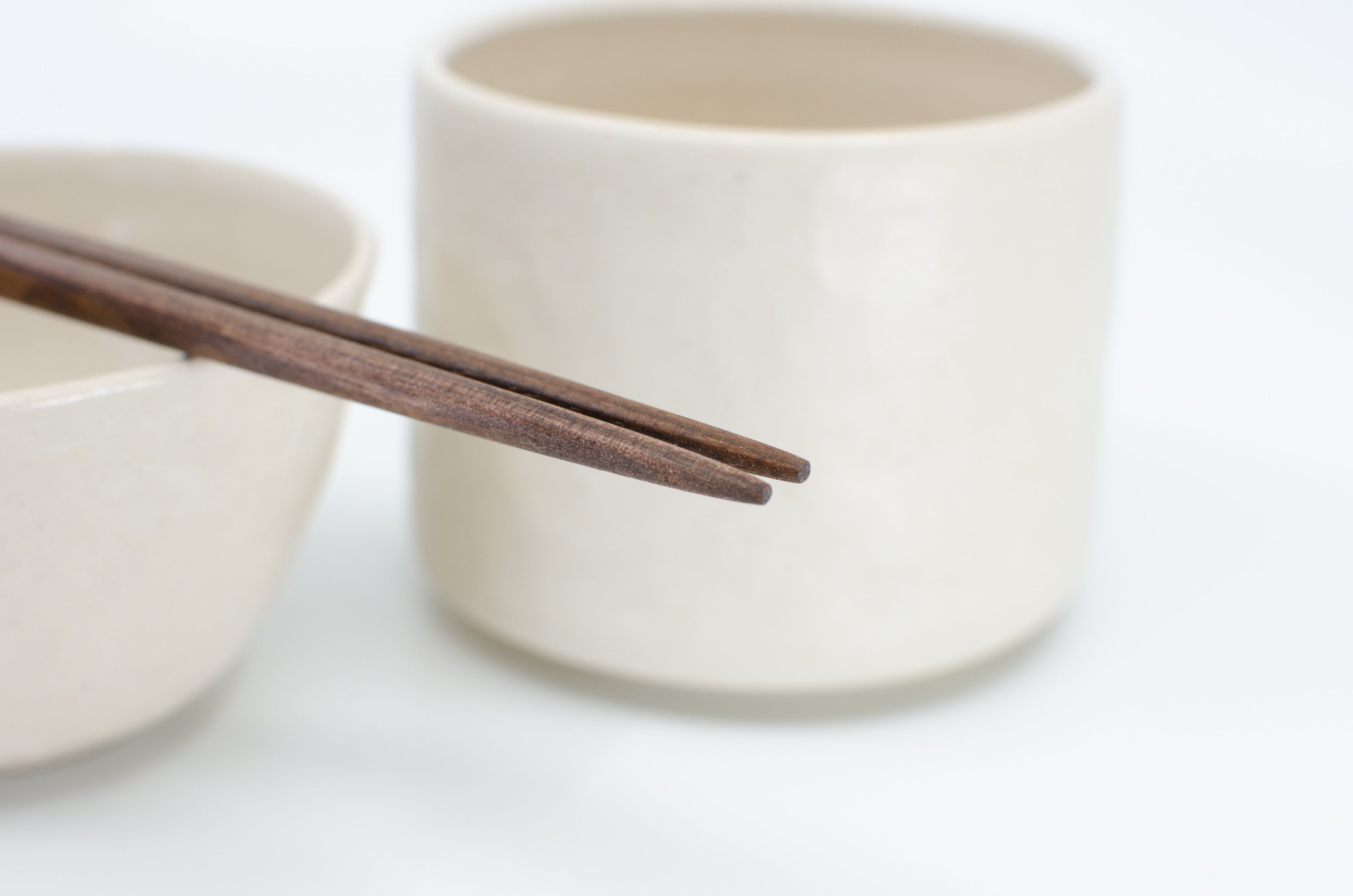
Simpo chopsticks are made in Edmonton from North American cherry and walnut hardwood. Instead of a synthetic surface coating, they are finished with 100% pure tung oil and beeswax. Applying the finish properly is a gradual process rather than a quick surface treatment.
The result is not intended to feel ornamental or precious. The goal is a dependable everyday object whose material, proportions and finish have been considered carefully.
Why does consistency matter?
A pair of chopsticks is a small precision tool. Slight crookedness, mismatched thickness or differences between the two sticks may not be obvious when they are sitting on a table. Once you begin moving them together, however, those small inconsistencies can become distracting.
A well-matched pair should allow both sticks to meet predictably. The shape should remain comfortable as the chopsticks move between your fingers, and the tips should offer enough control for noodles, rice and smaller pieces of food.
Our ideal is simple: good chopsticks should almost disappear in your hand.
Why are Simpo chopsticks unbranded?
Leaving the chopsticks unbranded is an intentional design decision.
An engraved logo does not improve their performance. It can interrupt the finished wood surface and create a small place where dirt or moisture may collect. It also turns the customer into an advertisement whether or not they want to be one.
We would rather let the material, proportions and workmanship identify the product.
Simpo may be right for you if:
- You prefer cherry or walnut hardwood to bamboo.
- The balance, shape and consistency of a pair matter to you.
- You want to know what finish is used on an everyday food-contact object.
- You appreciate products made in Canada.
- You are comfortable hand-washing and occasionally maintaining natural wood.
- You want one thoughtfully made pair rather than an inexpensive multipack.
Bamboo vs. Hardwood Chopsticks
Bamboo is a grass rather than a hardwood. It grows quickly, is lightweight and makes it possible to produce useful chopsticks at a very low cost. For households that need many pairs, bamboo can be a sensible choice.
Cherry and walnut are denser North American hardwoods with more substantial grain and visual depth. Each pair naturally varies in colour and pattern because it comes from real wood rather than a printed decorative surface.
Hardwood does not automatically make every pair of chopsticks better. The quality still depends on wood selection, straightness, shaping, matching, sanding and finishing. Material is only one part of the final experience.
For Simpo, hardwood is valuable because it supports the kind of feel, precision and long-term use we want from the product.
Natural Oil Finish vs. Protective Coating
A protective coating can make chopsticks easier to clean and, depending on the specific product, suitable for dishwasher use. This is a genuine practical advantage for people who prioritize convenience.
A natural tung-oil-and-beeswax finish offers a different experience. It allows the grain and character of the hardwood to remain visually and physically present. The surface can also be maintained when it begins to feel dry or worn.
The tradeoff is care. Naturally finished wooden chopsticks should be washed by hand, should not be soaked and should not be placed in a dishwasher. They should be dried after washing and maintained when needed.
One option is not automatically more responsible or more “natural” in every sense. The useful question is whether you prefer maximum washing convenience or a renewable finish that asks for occasional care.
Is It Worth Paying More for Chopsticks?
That depends on what you expect from them.
If chopsticks are used only occasionally, an inexpensive IKEA set may provide everything you need. Paying more will not automatically make sense for every household.
If you want a particular Japanese shape or a dishwasher-safe option, MUJI may offer the most practical balance.
If you use chopsticks frequently and notice how they balance, meet and move in your hand, a carefully made hardwood pair can become a meaningful everyday upgrade. The value is not a logo or an elaborate decoration. It comes from the material, time, precision and attention invested in a very simple object.
A good pair does not need to announce itself at every meal. It simply needs to work consistently enough that you stop thinking about it.
Which Chopsticks Should You Choose?
There is no single answer for everyone:
- For the lowest price and several reusable pairs, choose IKEA.
- For Japanese-style variety and easier-care options, explore MUJI’s individual models.
- For North American hardwood, natural finishing and careful attention to everyday feel, consider Simpo.
The best chopsticks are not necessarily the most expensive or the most decorative. They are the pair that fits your hands, your habits and the amount of care you are willing to give them.
Frequently Asked Questions
Are Simpo chopsticks dishwasher-safe?
No. Simpo’s current cherry and walnut chopsticks use a natural tung-oil-and-beeswax finish. They should be washed by hand, should not be soaked and should be dried after washing. We are working on a version that uses Japanese urushi which will be dish washer safe, so stay tuned
Are all MUJI chopsticks dishwasher-safe?
No. MUJI sells multiple chopstick models with different woods, shapes, finishes and care instructions. Check the specifications of the individual product before placing it in a dishwasher.
Are IKEA TREBENT chopsticks dishwasher-safe?
No. IKEA Canada currently instructs customers to hand-wash TREBENT bamboo chopsticks and treat them with a food-approved oil when necessary.
Is bamboo better than hardwood?
They serve different priorities. Bamboo is lightweight, fast-growing and affordable. Cherry and walnut hardwood provide a different grain, density and hand feel. The quality of either product also depends on how accurately it is shaped, matched and finished.
What is the difference between cherry and walnut chopsticks?
Cherry generally has a warmer and lighter appearance that develops more character with age. Walnut is darker and visually richer. Both can make excellent everyday chopsticks, so the choice is primarily about appearance and personal feel rather than one being universally better.
Why would someone buy one pair instead of a multipack?
A multipack is useful for families and guests. An individually made pair is intended for someone who values closer attention to the material, matching, proportions and finish. They solve different needs.
A Simple Object, Made with Intention
Chopsticks do not need more decoration, more branding or more features. They need the right material, reliable proportions and careful execution.
That is the idea behind Simpo: remove the distractions and pay attention to the small details that affect every meal.
Explore Simpo’s cherry and walnut hardwood chopsticks and find the shape that feels right for your everyday table.