
Choosing a pair of chopsticks may seem simple—until you compare the materials. Wood feels warm and natural, bamboo is light and affordable, fiberglass is easy to maintain, and metal can last for years. Each option has advantages, but the best chopstick material depends on how you eat, how much maintenance you accept and what kind of feel you prefer in your hand.
This guide compares hardwood, bamboo, fiberglass, stainless steel and plastic chopsticks to help you choose a pair that fits your everyday routine.
Quick Comparison: Which Chopstick Material Is Best?
|
Material |
Grip |
Comfort |
Durability |
Care |
Best for |
|
Hardwood |
Very good |
Warm and balanced |
High when properly cared for |
Hand-washing recommended |
Everyday dining and people who value natural materials |
|
Bamboo |
Good |
Light |
Moderate |
Usually hand-washing recommended |
Budget-friendly everyday use |
|
Fiberglass |
Good |
Smooth and slightly heavier |
High |
Often easy to clean; check the maker’s instructions |
Low-maintenance households |
|
Stainless steel |
Fair to moderate |
Cool and heavier |
Very high |
Usually easy to clean |
Korean dining and maximum durability |
|
Plastic or melamine |
Moderate |
Light |
Moderate |
Varies by product |
Casual use and inexpensive sets |
There is no single winner for everyone. For a balance of grip, comfort, appearance and long-term use, quality hardwood is a strong all-around choice. Fiberglass composite and stainless steel can be convenient and durable, but buyers should also consider food-contact certification, manufacturing quality and the condition of the surface—not just the base material.
Food-Contact Safety: What the Material Name Does Not Tell You
No chopstick material is automatically safe or unsafe simply because it is wood, fiberglass or stainless steel. Safety depends on the complete product: its exact formulation, finishes or additives, manufacturing quality, intended temperature range, regulatory compliance and condition after repeated use.
Food-contact materials are evaluated partly by whether substances can migrate from the finished article into food under its intended conditions of use. This is why a vague description such as “fiberglass” or “food-grade stainless steel” is less useful than traceable information from the manufacturer about the material, applicable food-contact standard and care limits.
For any reusable chopsticks, avoid untraceable products with a strong chemical smell, peeling coatings, cracks, exposed fibres, rust, pitting or deep scratches. Replace a pair when its food-contact surface can no longer be cleaned or is visibly breaking down.
1. Hardwood Chopsticks
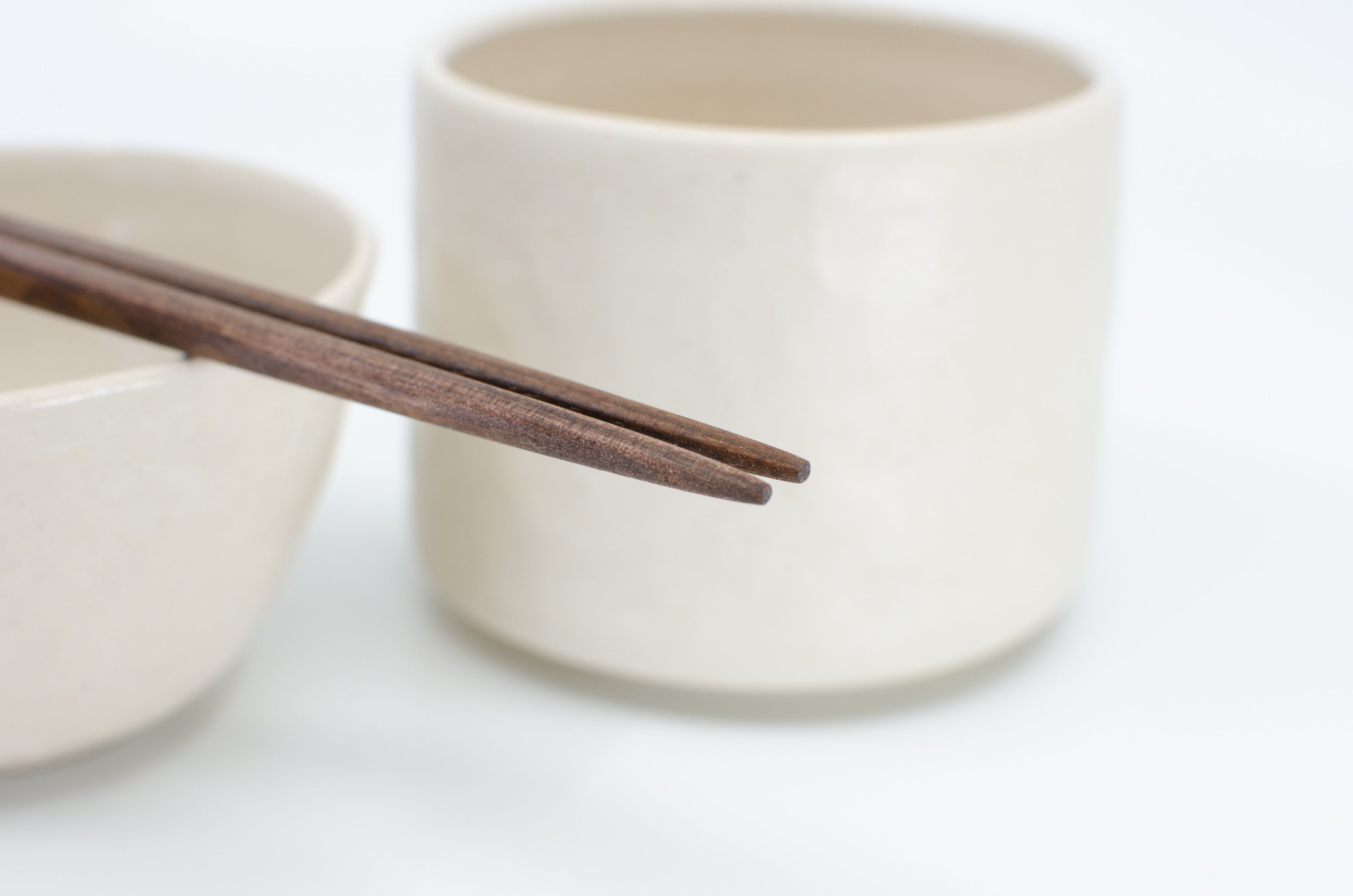
Hardwood chopsticks are made from denser woods such as walnut, cherry, maple or other suitable hardwood species. Compared with many inexpensive disposable wooden chopsticks, a well-made hardwood pair is designed to be reused rather than discarded after one meal.
Advantages of hardwood chopsticks
- Natural grip: Wood is less slippery than polished metal and many smooth plastic surfaces, making noodles, dumplings and small pieces of food easier to pick up.
- Comfortable feel: Hardwood does not feel as cold as metal and can feel more balanced and pleasant in the hand.
- Distinct appearance: Natural grain and color make every pair slightly different.
- Reusable: With proper cleaning and care, quality hardwood chopsticks can remain part of a household’s daily tableware for a long time.
- Repairable surface: Depending on the finish and the maker’s instructions, some wood products can be refreshed instead of immediately replaced when the surface begins to look dry.
Disadvantages of hardwood chopsticks
- They generally should not be soaked in water for long periods.
- Dishwashers can expose wood to prolonged heat, moisture and strong detergent, which may cause the surface to dry, warp or crack.
- They need to dry fully before being stored.
Hardwood is best for people who want a natural material and do not mind hand-washing their chopsticks. It is also a good choice for anyone who finds metal or highly polished chopsticks too slippery.
2. Bamboo Chopsticks
Bamboo chopsticks are widely available and are often less expensive than hardwood. Bamboo grows quickly, is lightweight and can provide good grip, especially when the surface is not highly polished.
Advantages of bamboo chopsticks
- Affordable: Bamboo is commonly used for budget-friendly reusable and disposable chopsticks.
- Lightweight: It can be comfortable for people who prefer a very light utensil.
- Good grip: The natural surface usually handles slippery foods better than polished metal.
- Widely available: Bamboo chopsticks are easy to find in many styles and price ranges.
Disadvantages of bamboo chopsticks
- Lower-cost pairs may become rough, splinter or lose their coating over time.
- Bamboo is generally less dense than many hardwoods and may not provide the same substantial feel.
- Product quality varies considerably, so the finish, adhesive and coating matter as much as the base material.
Wood vs bamboo chopsticks
The most important difference is not simply “wood versus bamboo,” but the quality of the finished product. Bamboo is a grass rather than a hardwood. It is usually lighter and more affordable, while hardwood often feels denser and more substantial. A well-finished bamboo pair can be perfectly suitable for daily meals, but shoppers looking for a more refined feel and distinctive natural grain may prefer hardwood.
3. Fiberglass Chopsticks
Fiberglass chopsticks are a popular reusable option in restaurants and busy households. They are usually made from a composite material rather than bare glass fibres, producing a smooth, dense utensil that resists water absorption.
Advantages of fiberglass chopsticks
- Durable and stable: They are less likely than natural wood to warp from normal washing.
- Low maintenance: Many fiberglass chopsticks are dishwasher-safe, although the manufacturer’s care instructions should always be checked.
- Consistent shape: The manufactured material allows for a uniform finish and size.
- Good for frequent use: They suit households that value convenience and washability.
Disadvantages of fiberglass chopsticks
- They do not have the warmth or unique grain of natural wood.
- Smooth models can feel more slippery than unfinished or lightly finished wood.
- They may feel heavier or less natural in the hand, depending on the design.
- “Fiberglass” describes a family of composites, not one standardized recipe. The polymer resin, pigments, additives and glass-fibre sizing can vary by manufacturer.
- If a product is poorly made, used above its rated temperature or badly worn, its surface may degrade and expose fibres or allow unwanted substances from the resin system to migrate.
Are fiberglass chopsticks safe?
Intact fiberglass chopsticks made from a properly formulated, tested food-contact composite can be suitable for their stated use. The glass fibres are normally embedded inside a polymer matrix rather than sitting loose on the surface, so the inhalation concern associated with cutting or sanding fiberglass is not the normal exposure route when eating with an undamaged pair.
The more relevant consumer question is whether the finished composite has been tested for food contact under the temperatures and foods for which it is sold. Some products marketed as fiberglass chopsticks use glass-fibre-reinforced plastics, and the safety of the resin, colorants, additives and fibre-sizing ingredients matters alongside the glass itself. Do not keep using a pair that becomes rough, frayed, cracked, chalky or visibly worn. If the seller cannot identify the material or provide meaningful food-contact compliance information, a more traceable product is the cautious choice.
Fiberglass vs wooden chopsticks
Choose fiberglass if dishwasher compatibility and minimal maintenance are your main priorities. Choose wood if tactile comfort, natural appearance and grip matter more, and you are comfortable washing the pair by hand.
4. Stainless Steel Chopsticks
Metal chopsticks are especially associated with Korean dining, although they are now used in many households. Stainless steel does not absorb water and is exceptionally durable.
Advantages of stainless steel chopsticks
- Very durable: They do not splinter and are difficult to break during normal use.
- Easy to clean: Stainless steel handles water and repeated washing well.
- Non-porous surface: Food and odors do not easily penetrate the material.
- Distinct dining style: Their weight and appearance pair naturally with Korean table settings.
Disadvantages of stainless steel chopsticks
- Smooth metal can be slippery, especially for beginners.
- Metal feels colder and heavier than wood or bamboo.
- Thin, flat Korean-style chopsticks can require more finger control than round or square wooden designs.
- Metal may make more noise against ceramic bowls and plates.
- Stainless steel can contain nickel and chromium. Small amounts may be released, particularly from some grades or finishes and during prolonged contact with acidic or salty foods.
- People with a known nickel allergy may prefer verified nickel-free utensils or another suitable material.
Are stainless steel chopsticks safe?
Quality stainless steel is widely used for food-contact equipment and utensils because it is durable and corrosion-resistant. However, “stainless steel” covers many alloys. Nickel and chromium can migrate from stainless steel in some conditions, with release influenced by the alloy, surface quality, acidity, salt, temperature and contact time.
Chopsticks normally touch food briefly and are not used to cook or store acidic food for hours, so their potential exposure is not directly comparable with simmering tomato sauce in a stainless-steel pot. Even so, buyers should choose a reputable food-contact product and replace chopsticks that rust or develop significant pitting. Anyone with a diagnosed nickel allergy should follow their healthcare professional’s advice; Health Canada specifically advises nickel-allergic consumers not to use cookware containing nickel.
Metal chopsticks are a good fit for experienced users who appreciate their durability and do not mind the extra weight or reduced grip.
5. Plastic and Melamine Chopsticks
Plastic and melamine chopsticks are available in many colors and designs. They are often affordable and lightweight, but their performance depends heavily on material quality, shape and surface texture.
Advantages of plastic chopsticks
- Usually inexpensive
- Lightweight and available in many designs
- Less sensitive to short contact with water than unfinished wood
Disadvantages of plastic chopsticks
- Smooth surfaces can be slippery.
- Lower-quality products may scratch, bend or show wear.
- Heat resistance and dishwasher suitability vary, so the product instructions matter.
- They generally lack the natural feel and individual grain of wood.
Plastic chopsticks can work well as a casual or inexpensive option, but buyers should check that the product is intended for food contact and follow its temperature and washing instructions.
What Is the Best Material for Everyday Chopsticks?
For most households, the choice comes down to two priorities:
- Choose hardwood if you value grip, warmth, balance and a natural appearance.
- Choose fiberglass if easy cleaning and low maintenance are more important—and the manufacturer identifies it as suitable for food contact at the temperatures you use.
- Choose bamboo if you want a light and affordable option.
- Choose stainless steel if maximum durability and Korean-style dining appeal to you.
- Choose plastic or melamine if cost, color and casual use are the main considerations.
People who are new to chopsticks often benefit from a material with some surface grip. A square or gently textured hardwood design can also help prevent the chopsticks from rolling between the fingers or off the table.
Why Simpo Uses Hardwood
At Simpo, we make reusable hardwood chopsticks for people who want everyday tableware to feel considered, comfortable and personal. Natural walnut and cherry offer distinct colors and grain patterns, while the wood provides a warm feel and useful grip at the table.
Our choice of hardwood is not based on the idea that every other material is inferior. Fiberglass and stainless steel can be excellent for customers who prioritize dishwasher convenience. We choose hardwood because it offers the combination we care about most: tactile comfort, natural character, practical grip and a product that can be used repeatedly with proper care.
Material transparency matters to us as well. A broad label such as “fiberglass composite” does not reveal the complete resin and additive system, while “stainless steel” does not by itself identify the alloy or nickel content. Simpo’s chopsticks use identifiable natural hardwood—walnut or cherry—finished with tung oil and beeswax. Customers should still follow the care instructions and replace any utensil, including wood, if it cracks, develops mold or has a badly damaged surface.
Frequently Asked Questions
Which chopstick material lasts the longest?
Stainless steel and quality fiberglass are generally the most resistant to water and repeated washing. Quality hardwood can also last for years when it is hand-washed, dried promptly and stored properly. Actual lifespan depends on construction, finish, frequency of use and care.
Are wooden chopsticks hygienic?
Reusable wooden chopsticks can be hygienic when they are washed after use, allowed to dry completely and replaced if they develop deep cracks, persistent odor, mold or a badly damaged surface. Avoid leaving them submerged in water or storing them while damp.
Can wooden chopsticks go in the dishwasher?
Unless the maker specifically says otherwise, hand-washing is the safer choice. Dishwasher heat, prolonged moisture and detergent can dry out or damage natural wood over time.
Are fiberglass chopsticks better than wooden chopsticks?
Fiberglass is usually better for dishwasher convenience and minimal maintenance. Wood is often better for a warm, natural feel and surface grip. The better choice depends on the user’s priorities.
Can fiberglass come out of composite chopsticks?
In a well-made, undamaged composite, the glass fibres should remain embedded in the resin. Stop using the chopsticks if the surface becomes rough, cracked, frayed or visibly exposes fibres. Do not sand or grind fiberglass-composite chopsticks, because that can create irritating dust and fibres.
Do stainless steel chopsticks release nickel or chromium?
Stainless steel can release small amounts of nickel and chromium, especially under more aggressive conditions such as heat, acidity, salt and long contact times. Normal chopstick use involves much shorter food contact than cooking or storage, but people with nickel allergy should pay particular attention to the alloy and manufacturer’s information.
Are metal chopsticks difficult to use?
They can be more challenging for beginners because polished metal provides less friction and often feels heavier. Textured tips can improve grip.
Which chopsticks are best for beginners?
Beginners usually find lightweight or medium-weight chopsticks with a non-slip surface easiest to control. Wood and bamboo are popular choices, while square-sided designs may feel more stable than completely round chopsticks.
Final Verdict
The best chopstick material is the one that suits your habits and comes from a manufacturer that clearly identifies it for its intended food-contact use. Fiberglass composite offers convenience, steel offers exceptional durability, bamboo offers affordability, and hardwood offers a strong balance of comfort, grip, material simplicity and natural beauty.
If you enjoy the warmth and character of natural materials—and are willing to hand-wash them—a well-made pair of hardwood chopsticks can turn an ordinary daily utensil into something you will enjoy using meal after meal.